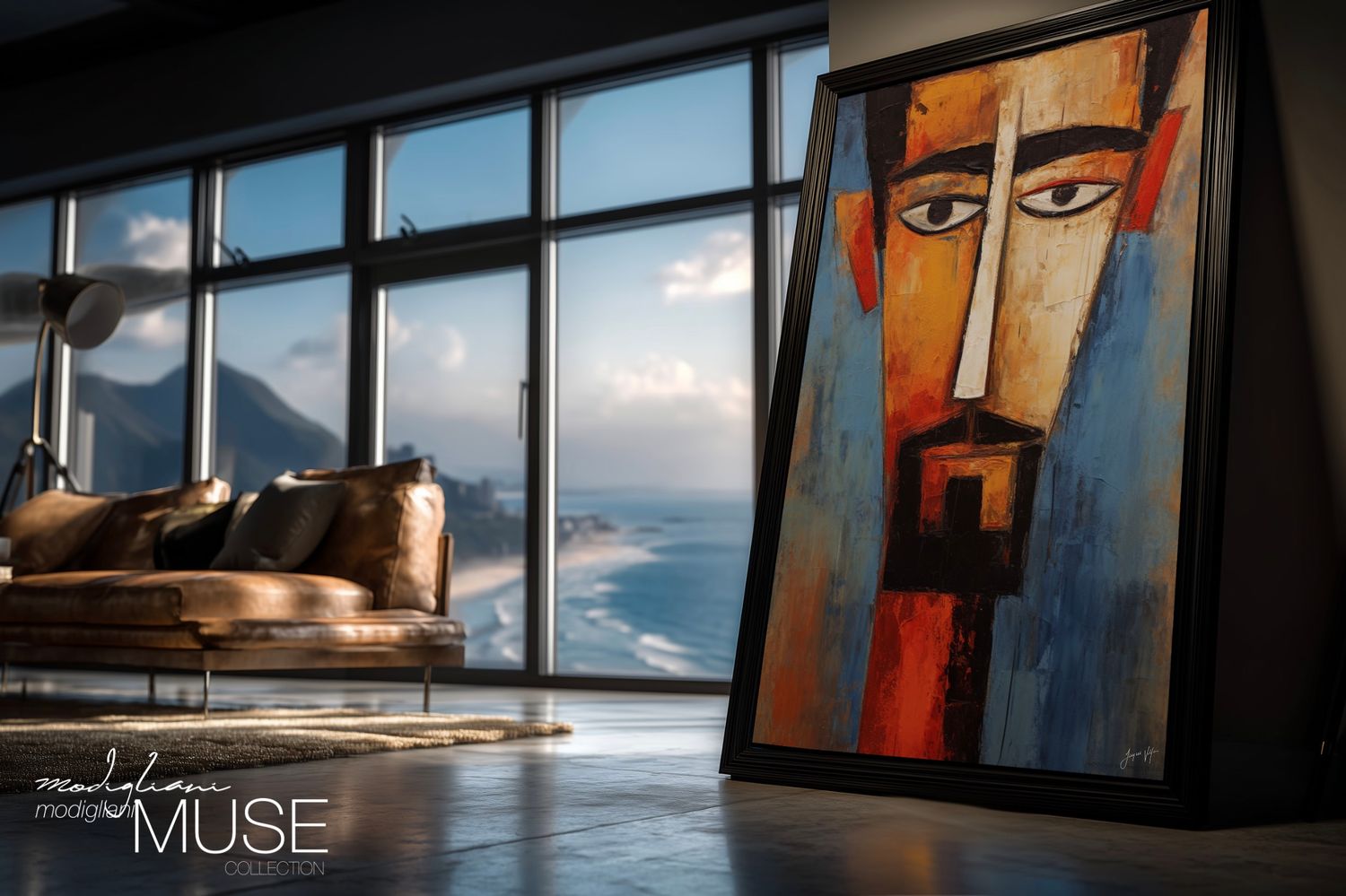
Charles, Built from the Geometry of a Man Who Has Decided Original Art Canvas Print | Modigliani Muse Collection
SKU C-ABSAMDGL006
R1 499.00
Canvas Size
Frame Thickness
Please choose
Every plane in its place. Every decision already made.
1
Save this product for later
Have questions?
Charles, Built from the Geometry of a Man Who Has Decided Original Art Canvas Print | Modigliani Muse Collection
Product Details
THE WORK
Charles is all structure. The face fills the canvas in a near-perfect vertical rectangle, the forehead dark and flat at the crown, the features reduced to their most essential geometric forms. The nose is a clean white vertical that divides the face into two warm planes of burnt orange and ochre, each one a distinct impasto field sitting with full confidence against the other. The eyes are wide-set and level, white-ground with dark centres, outlined with a heaviness that feels architectural rather than expressive. A strong square beard sits at the jaw, near-black with a warm brown centre block, as deliberate as a full stop. Red pushes through at the ears and at the vertical column running down from the chin, giving the composition heat without softening it. The background splits into cool sky-blue on both sides and warmer terracotta passages at the edges, keeping the face forward without competing with it. Every element in this painting sits exactly where it was put.
THE INSPIRATION
The title came before the final composition was resolved. Charles is not a specific man. He is the idea of a man who has done the internal work, who has arrived at his own geometry and stopped revising it. The formal language here pulls from the Modigliani lineage but pushes further toward the structural clarity of early Cubism, the face as architecture, each plane load-bearing, nothing decorative. The square beard was a deliberate choice: not a style detail but a structural anchor, the base of a composition that reads from the ground up as something built rather than simply painted.
WHAT IT CARRIES
What this face communicates is not confidence in any performed sense. It is the quieter quality that comes after confidence has been tested enough times to stop needing an audience. The symmetry of the composition, unusual in the Modigliani Muse collection, creates a stillness that most portraits achieve only accidentally. Charles is still on purpose. The red passages at the ears and the vertical column below the beard are the only suggestion that something runs beneath the surface, that the geometry is not the whole story, only the part being shown. That tension, structure above, heat below, is what keeps the piece from reading as cold.
LIVING WITH IT
The burnt orange, ochre, sky blue, and deep black palette positions Charles as one of the most interior-adaptable pieces in the collection. In a space with warm raw materials, terracotta tile, aged timber, or copper accents, the orange planes arrive already fluent. In a cooler, more minimal space, the blue background does the work of connecting the piece to the room while the orange face generates warmth the interior cannot produce on its own. This is a piece that works in a boardroom as naturally as it works in a living room or a boutique hotel lobby. The symmetry makes it ideal for centred placement above a fireplace, console, or bed. The A0 at 35mm profile is where the geometry reaches its full architectural impact.
WHO IT'S FOR
This is for the person who has stopped explaining themselves and started simply being themselves, and who wants that quality reflected on the wall. It is for the designer whose brief calls for a male portrait with structural authority and visual precision, something that holds a room by geometry alone.
A NOTE ON SIZES
This design is available in a range of sizes to suit your space. Available as A0 and A1 poster prints, rolled and shipped. Also available as mounted canvas prints in 16mm, 25mm, 35mm, and 50mm profile thicknesses in both A0 and A1. A large format 1200 x 2000mm option is available on both poster and mounted canvas. Email jacques@jacquesviljoen.co.za for a quote and full details. Please note that proportions shown in previews are for display purposes only. Your final print dimensions will depend on the size you select.
The most popular size across our canvas range is the A0 in a 35mm profile frame.
You May Also Like
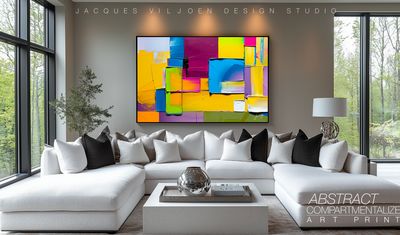
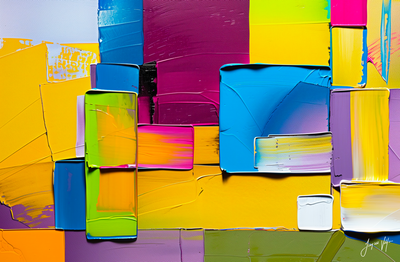
Compartmentalize Abstract Canvas Wall Art Design
Compartmentalize Abstract Canvas Wall Art Design
SKU C-ABSCOM026
R1 999.00
Display prices in:ZAR