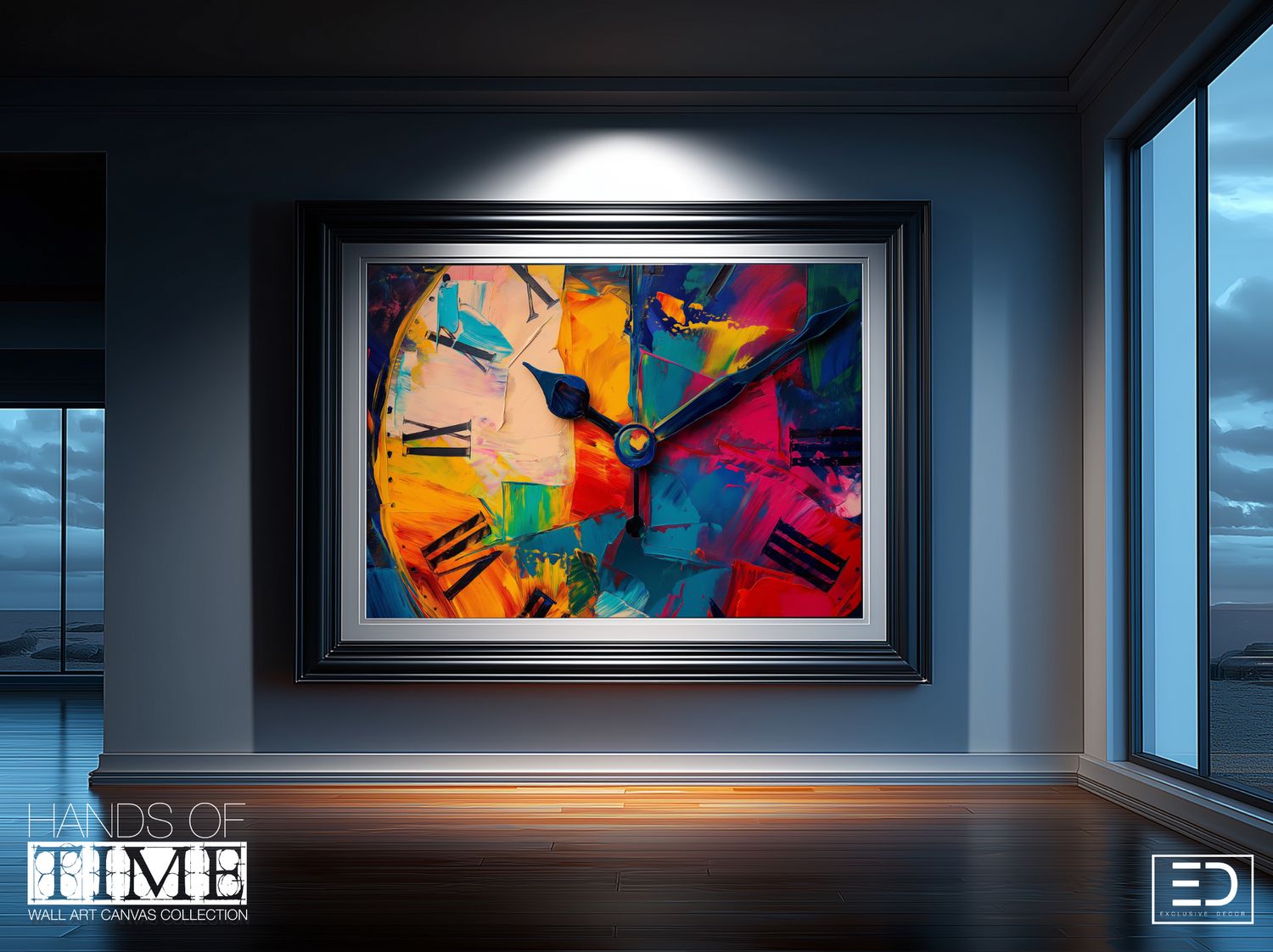
HANDS OF TIME: TEN PAST TEN Original Art Print
SKU C-HOTC028
R1 499.00
Canvas Size
Frame Thickness
Please choose
The one moment a clock looks most like itself
1
Save this product for later
Have questions?
HANDS OF TIME: TEN PAST TEN Original Art Print
Product Details
The Work
The clock fills this landscape frame at close range, its face split across the centre between two entirely different worlds. The left half is white and cream, yellow and orange warming through the surface, Roman numerals in dark navy sitting at their correct positions with full legibility. Three large navy hands extend from a chrome-gold hub at dead centre in a symmetrical open V, one toward eleven, one toward two, the third dropping toward six. Ten past ten. The position every watchmaker chooses when a clock needs to look its best. On the right side of the same face, the structure dissolves entirely into teal, cobalt, red, magenta, and hot pink in broad impasto planes, numerals surfacing and sinking through the layers. The split happens not between two paintings but across a single surface, at its own midpoint, without negotiation.
The Inspiration
Ten past ten is the moment the clock industry has always known looks right. Hands open and symmetrical, the face unobstructed, the form at its most composed. This work takes that precise moment and asks what happens when you let the other half of the face feel everything the composed half is holding back. The left is the clock at its most presentable. The right is what it actually contains. The impasto strokes on the right are broader and more physical than those on the left, as though the paint needed more room once it crossed the midpoint.
What It Carries
The symmetry of ten past ten carries its own quiet power. Those hands have been chosen for a century to represent clocks at their finest, and here they sit inside a face that is coming apart on one side and holding firm on the other. There is something genuinely funny and genuinely true in that image. The most composed position a clock can take, and it still cannot keep its other half together. Viewers return to this piece because it is both the most structured and the most honest in the collection.
Living With It
The white and cream left face gives the eye a place to settle before the colour takes over on the right, which makes this piece more versatile than its full chromatic range suggests. It works in contemporary living spaces, home offices, open-plan dining rooms, and hotel corridors where the landscape format stretches across a long wall. The chrome-gold hub catches warm light and shifts quietly through the day. In a home office it sits above a desk with the kind of dry wit that makes a long afternoon bearable.
Who It's For
For people who have their best face forward and a full spectrum of feeling behind it, and are comfortable with both. For designers who want a landscape piece that earns a second look with its title and rewards a third with everything happening on the right side of the face.
A Note on Sizes
This design is available in a range of sizes to suit your space. Available as A0 and A1 poster prints, rolled and shipped. Also available as mounted canvas prints in 16mm, 25mm, 35mm, and 50mm profile thicknesses in both A0 and A1. A large format 1200 x 2000mm option is available on both poster and mounted canvas. Email jacques@jacquesviljoen.co.za for a quote and full details. Please note that proportions shown in previews are for display purposes only. Your final print dimensions will depend on the size you select.
The most popular size across our canvas range is the A0 in a 35mm profile frame.
You May Also Like
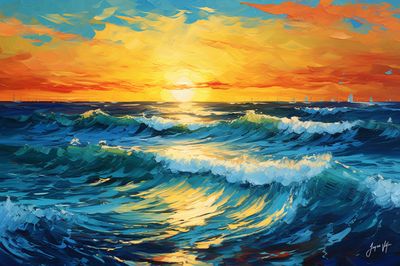
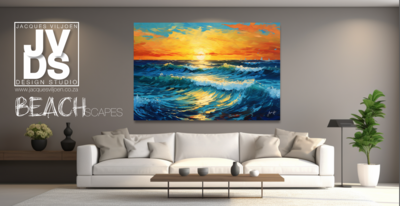
Twilight Tide - A Beach Sunset Canvas Design
Twilight Tide - A Beach Sunset Canvas Design
SKU C-ABSBSPS007
R1 999.00
Display prices in:ZAR